


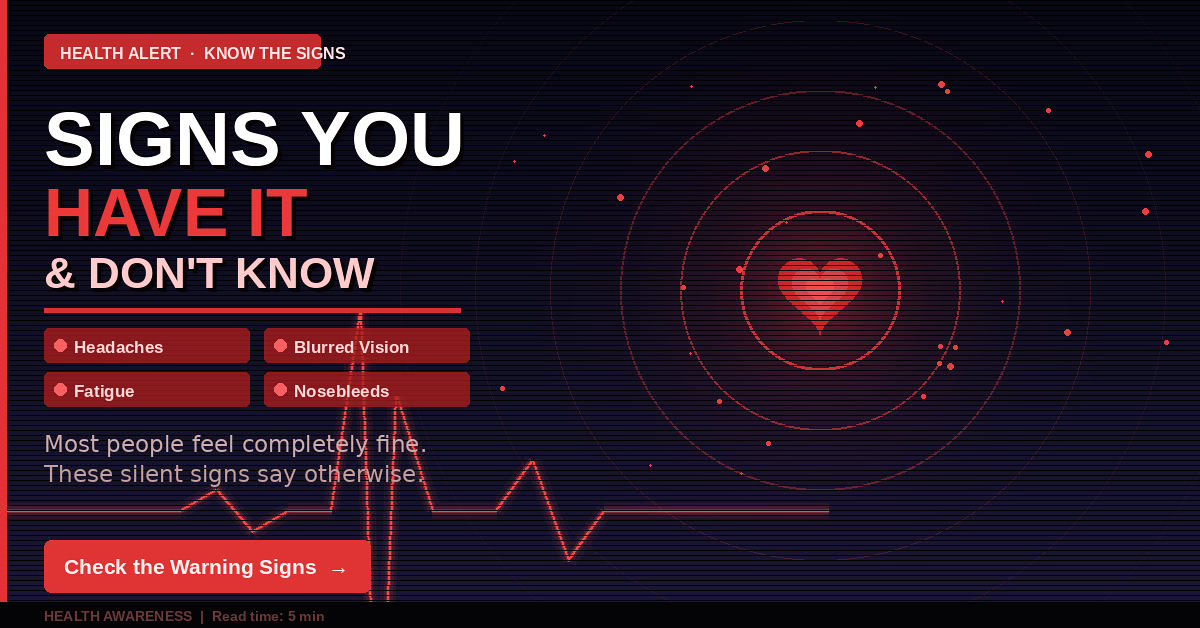
Most people with high blood pressure feel completely fine — until something goes wrong. Here’s what your body might be telling you.
The Silent Killer You Can’t Feel
High blood pressure affects nearly 1 in 3 Canadian adults, yet most have no idea they have it. Doctors have long called hypertension “the silent killer” because it rarely causes noticeable symptoms until serious damage has already been done to your heart, kidneys, or brain.
The troubling reality is that you can feel perfectly fine — no dizziness, no chest pain, no headaches — and still have dangerously elevated blood pressure that is quietly damaging your arteries every single day. This is exactly why regular blood pressure checks are so important, even when you feel great.
Warning Signs Most People Ignore
While high blood pressure is often symptom-free, some people do experience subtle warning signs that are easy to dismiss or attribute to other causes.
Frequent headaches that occur in the morning or at the back of the head are one such sign. These are not the same as tension headaches — they tend to feel dull and heavy, and they are most common when blood pressure is severely elevated.
Nosebleeds are another overlooked signal. Occasional nosebleeds are normal, but if you’re getting them frequently without an obvious cause like dry air or allergies, it could be worth getting your blood pressure checked.
Blurred or double vision can also occur when high blood pressure affects the blood vessels in your eyes — a condition called hypertensive retinopathy. Many people chalk this up to eye strain from screens, but persistent vision changes should never be ignored.
Shortness of breath during activities that never used to wind you, such as climbing stairs or walking briskly, can indicate that your heart is working harder than it should to pump blood against elevated pressure.
Buzzing or ringing in your ears (tinnitus) has been associated with hypertension in several studies. If this is something new for you, blood pressure is worth ruling out as a cause.
Who Is Most at Risk?
Certain lifestyle and genetic factors significantly increase your chances of developing high blood pressure. You are at higher risk if:
You are over 55 years old. Blood pressure tends to rise with age as arteries naturally stiffen.
You have a family history of hypertension. If one or both parents had high blood pressure, your risk is significantly elevated.
You eat a high-sodium diet. Canadians consume far more sodium than recommended, largely from processed and restaurant foods.
You are overweight or obese. Every extra pound puts additional strain on your cardiovascular system.
You are sedentary. Regular physical activity helps keep blood pressure in a healthy range.
You smoke or drink alcohol heavily. Both raise blood pressure directly and damage blood vessel walls over time.
You have chronic stress. Long-term psychological stress keeps cortisol levels elevated, which in turn keeps blood pressure higher than it should be.
What the Numbers Actually Mean
Blood pressure is measured with two numbers. The top number (systolic) reflects the pressure in your arteries when your heart beats. The bottom number (diastolic) reflects the pressure between beats.
A reading of 120/80 mmHg or lower is considered normal. Readings between 121-129/80 are considered elevated. Anything at 130/80 or above is classified as high blood pressure (hypertension) by most medical guidelines.
Stage 1 hypertension is 130-139/80-89 mmHg. Stage 2 hypertension is 140/90 mmHg or higher. A hypertensive crisis — requiring immediate medical attention — occurs at readings above 180/120 mmHg.
Simple Steps to Check and Lower Your Blood Pressure
The first step is getting your numbers checked. Many pharmacies offer free blood pressure testing machines. Your family doctor can also order a more comprehensive assessment, including 24-hour ambulatory blood pressure monitoring.
If your numbers are high, lifestyle changes can make a meaningful difference. Reducing sodium intake to under 2,000 mg per day is one of the most effective interventions. The DASH diet — rich in fruits, vegetables, whole grains, and lean proteins — has been shown in clinical trials to reduce systolic blood pressure by 8-14 mmHg.
Aiming for 150 minutes of moderate exercise per week, maintaining a healthy weight, limiting alcohol, quitting smoking, and managing stress through mindfulness or therapy are all evidence-based approaches to bringing blood pressure down.
For many people, medication is also necessary and nothing to be ashamed of. Modern blood pressure medications are highly effective, generally well-tolerated, and dramatically reduce the risk of heart attack, stroke, and kidney disease.
When to See a Doctor Immediately
Seek emergency care right away if you experience a sudden severe headache unlike any you’ve had before, chest pain or tightness, sudden difficulty speaking or understanding speech, sudden vision loss in one or both eyes, sudden weakness or numbness on one side of your body, or difficulty breathing at rest.
These symptoms may indicate a hypertensive emergency or stroke — conditions where every minute of delay increases the risk of permanent damage or death.
Don’t wait. Blood pressure is easy to check and easy to treat. The only dangerous thing is not knowing your numbers.
